
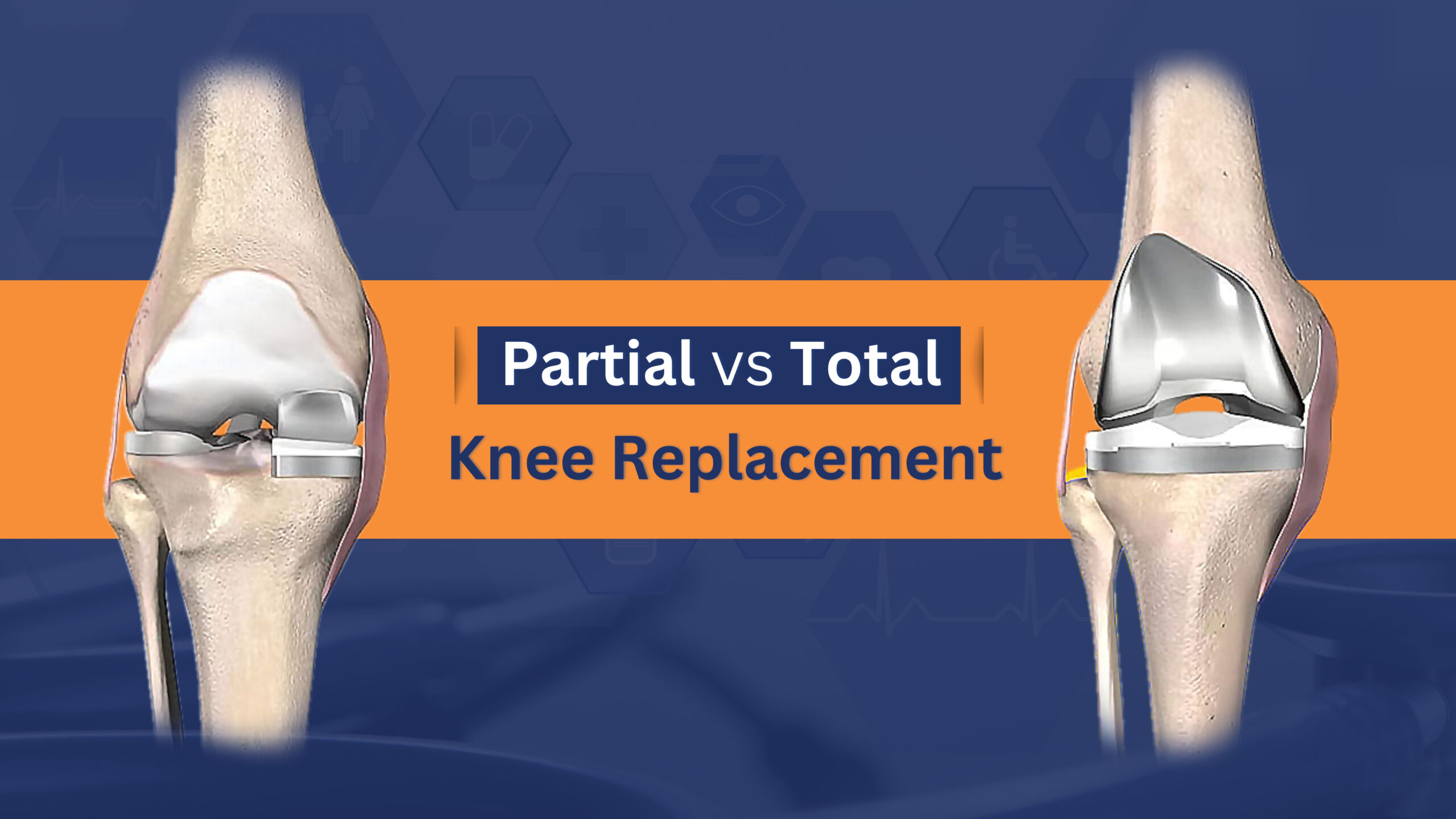
Partial vs Total Knee Replacement – How to Know Which Surgery Is Right for You
Knee pain caused by arthritis or joint damage can severely affect your daily life—making simple activities like walking, climbing stairs, or getting out of bed difficult. When medicines, physiotherapy, and injections no longer provide relief, knee replacement surgery becomes a reliable and long-term solution.
One common question patients ask is:
“Do I need a partial knee replacement or a total knee replacement?”
A clear comparison of both procedures helps patients decide the right treatment for their knee problem (Partial vs Total Knee Replacement).
What Is Knee Replacement Surgery?
Knee replacement surgery involves removing damaged cartilage and bone from the knee joint and replacing it with an artificial implant. The primary aim is to reduce pain, improve knee alignment, and help restore smooth joint movement.
Depending on the extent of joint damage, surgeons may recommend either:
- Partial Knee Replacement (PKR)
- Total Knee Replacement (TKR)
What Is Partial Knee Replacement?
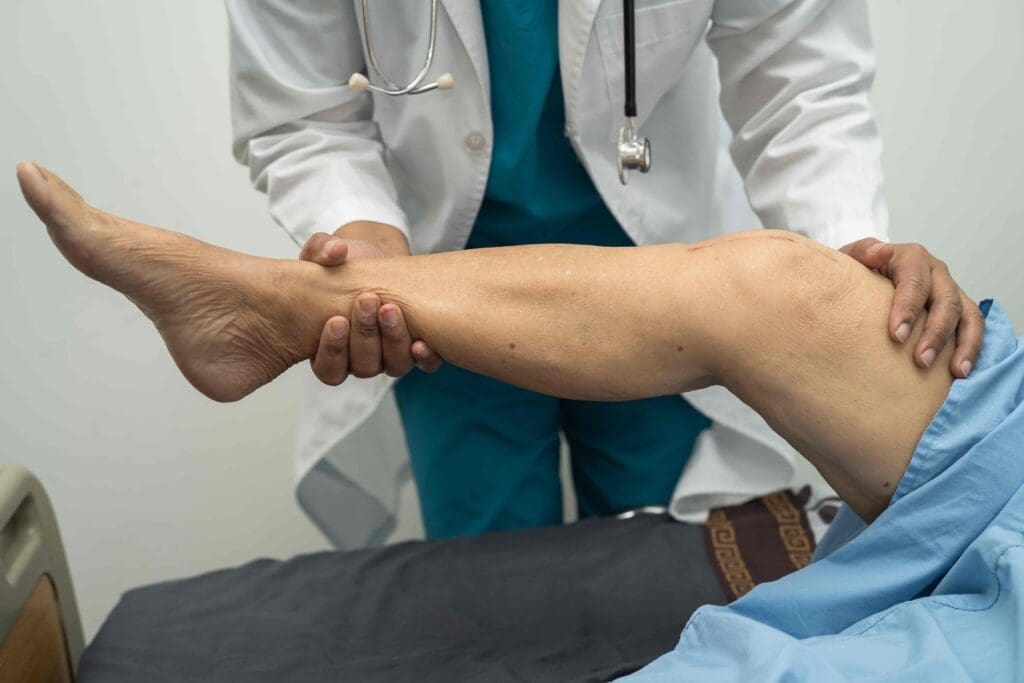
A partial knee replacement is done when arthritis or damage is limited to only one compartment of the knee—most commonly the inner (medial) side (Partial vs Total Knee Replacement).
Key Features of Partial Knee Replacement:
- Only the damaged portion of the knee is replaced
- Healthy bone, cartilage, and ligaments are preserved
- Smaller incision and less tissue damage
- Faster recovery compared to total knee replacement
Who Is a Good Candidate?
Partial knee replacement may be suitable if:
- Arthritis affects only one compartment
- Knee ligaments (especially ACL) are intact
- Knee deformity is minimal
- Discomfort is mainly felt on a single side of the knee joint
- Patient is relatively active with good range of motion
What Is Total Knee Replacement?
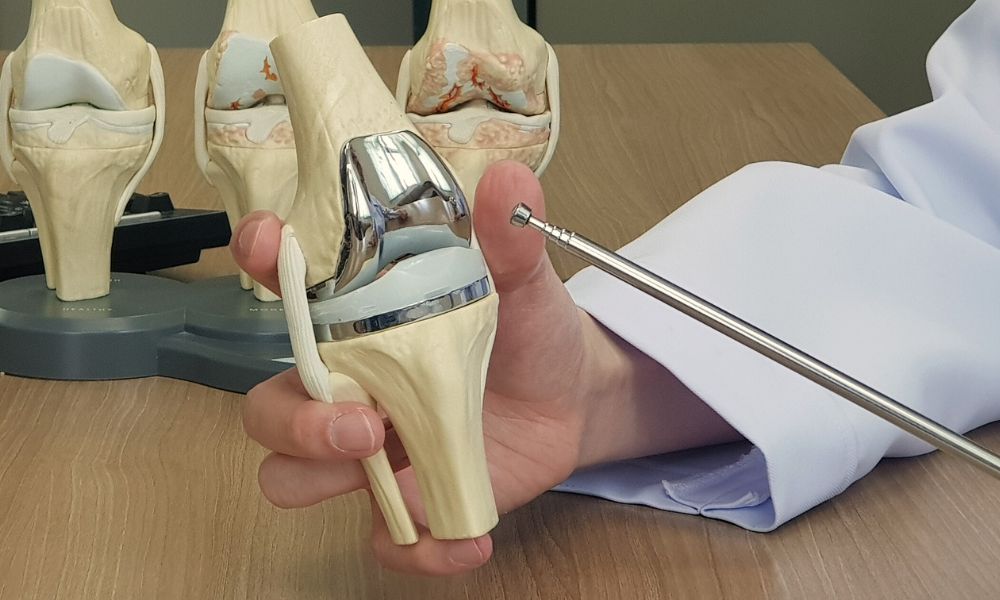
A total knee replacement involves replacing all three compartments of the knee joint—medial, lateral, and patellofemoral (Partial vs Total Knee Replacement).
Key Features of Total Knee Replacement:
- Entire knee joint surface is replaced
- Best option for advanced or widespread arthritis
- Long-term pain relief and improved function
- Suitable for severe deformity and stiffness
Who Needs Total Knee Replacement?
Total knee replacement is recommended if:
- Arthritis affects multiple compartments
- Pain is severe and constant
- Knee is significantly bowed or stiff
- Daily activities are seriously restricted
- Partial replacement is not sufficient
Partial vs Total Knee Replacement: Key Differences
| Feature | Partial Knee Replacement | Total Knee Replacement |
|---|---|---|
| Area replaced | Only damaged compartment | Entire knee joint |
| Surgery time | Shorter | Slightly longer |
| Blood loss | Less | More |
| Recovery | Faster | Gradual but predictable |
| Knee feel | More natural | Slightly artificial |
| Longevity | May need revision later | Long-lasting results |
Advantages and Limitations
Advantages of Partial Knee Replacement
- Quicker recovery and rehabilitation
- Less post-operative pain
- Better knee movement
- Feels more like a natural knee
Limitations of Partial Knee Replacement
- Not suitable for all patients
- Arthritis may progress in other compartments
- May require conversion to total knee replacement later
Advantages of Total Knee Replacement
- Comprehensive treatment for severe arthritis
- Long-term durability
- Reliable pain relief
- Suitable for majority of arthritis patients
Limitations of Total Knee Replacement
- Longer recovery time
- More extensive surgery
- Higher initial rehabilitation effort
How Does the Surgeon Decide?
The decision to perform a partial or total knee replacement is based on several factors, including:
- X-ray and MRI findings
- Severity and location of arthritis
- Knee alignment and ligament stability
- Age, activity level, and expectations of the patient
An experienced orthopedic surgeon will carefully evaluate your knee before recommending the most appropriate procedure (Partial vs Total Knee Replacement).
Life After Knee Replacement
Both partial and total knee replacements can significantly improve quality of life. With proper physiotherapy and care:
- Most patients walk comfortably within weeks
- Pain reduces dramatically
- Daily activities become easier
- Long-term results are excellent
Conclusion
There is no “one-size-fits-all” answer when it comes to knee replacement surgery.
Partial knee replacement is ideal for selected patients with limited arthritis, while total knee replacement remains the gold standard for advanced knee joint disease.
The best approach is a personalized evaluation by an orthopedic specialist, who can guide you toward the safest and most effective treatment for long-term relief (Partial vs Total Knee Replacement).