
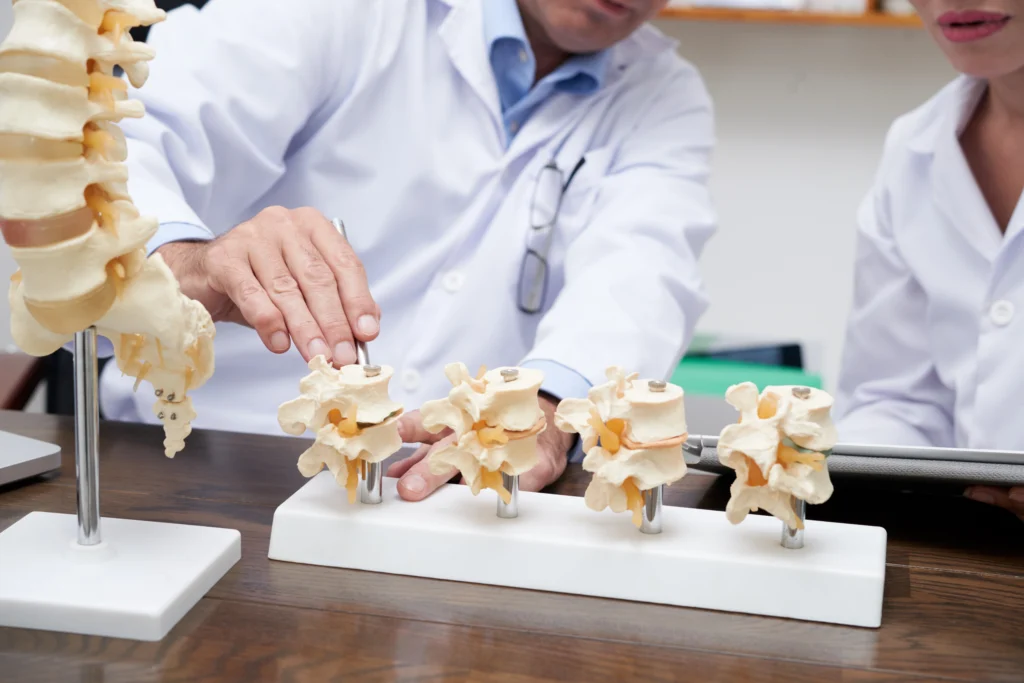
Hip replacement surgery has become one of the most successful procedures in modern orthopedics. It helps patients regain mobility, reduce pain, and improve overall quality of life. However, as patients age, the condition of their spine plays a crucial role in determining the outcome of hip replacement surgery—especially when it comes to acetabular cup positioning.
Understanding the Basics
In total hip replacement, the damaged hip joint is replaced with an artificial implant. One of the most important components of this implant is the acetabular cup, which is placed in the pelvic socket. The position and angle of this cup are critical for ensuring stability, smooth movement, and long-term success of the surgery.
But here’s where things get complex—no two patients are the same, especially when aging is involved.
What Happens to the Spine with Age?
As people grow older, the spine undergoes several natural changes. It can become stiff, lose its natural curvature, or develop conditions like degenerative disc disease or spinal imbalance. These changes affect how the pelvis moves and aligns with the body.
The spine and pelvis work together as a functional unit. When the spine loses flexibility or becomes misaligned, it directly impacts pelvic tilt. This, in turn, affects how the acetabular cup should be positioned during surgery.
Why Is Acetabular Cup Positioning So Important?
The angle of the acetabular cup determines how well the hip joint functions after surgery. If the cup is not placed correctly, it can lead to complications such as dislocation, uneven wear, reduced mobility, or even the need for revision surgery.
In younger patients with a flexible spine, standard positioning techniques often work well. However, in older patients with a stiff or imbalanced spine, the same approach may not be effective.
This is why understanding the relationship between the aging spine and pelvic movement is essential for successful outcomes.
The Challenge Surgeons Face
For orthopedic surgeons, the biggest challenge is predicting how the pelvis will behave during different movements like sitting, standing, or walking. In patients with a healthy spine, the pelvis adjusts naturally. But in patients with an aging spine, this adaptability is reduced.
This means the surgeon cannot rely on a fixed angle for placing the acetabular cup. Instead, they must customize the positioning based on the patient’s spinal condition, posture, and overall alignment.
A Personalized Approach Makes the Difference
Every patient requires a tailored surgical plan. Advanced evaluation techniques, including imaging and posture analysis, help in understanding how the spine and pelvis interact.
An experienced surgeon focuses on these details to ensure that the acetabular cup is positioned in a way that offers maximum stability and long-term success. This personalized approach minimizes the risk of complications and improves recovery outcomes.
Expertise Matters in Complex Cases
Handling cases involving an aging spine requires not only technical skill but also deep clinical understanding. Surgeons who specialize in joint replacement and have experience dealing with complex spinal conditions are better equipped to manage such challenges.
With the right planning and precision, even patients with significant spinal changes can achieve excellent results from hip replacement surgery.
Conclusion
An aging spine adds a layer of complexity to hip replacement surgery, particularly in acetabular cup positioning. However, with careful assessment, advanced planning, and a personalized approach, these challenges can be effectively managed.
Choosing the right surgeon who understands the connection between the spine and hip is key to achieving a successful and long-lasting outcome. With expert care and precision, patients can return to a pain-free and active lifestyle, even in the presence of age-related spinal changes.